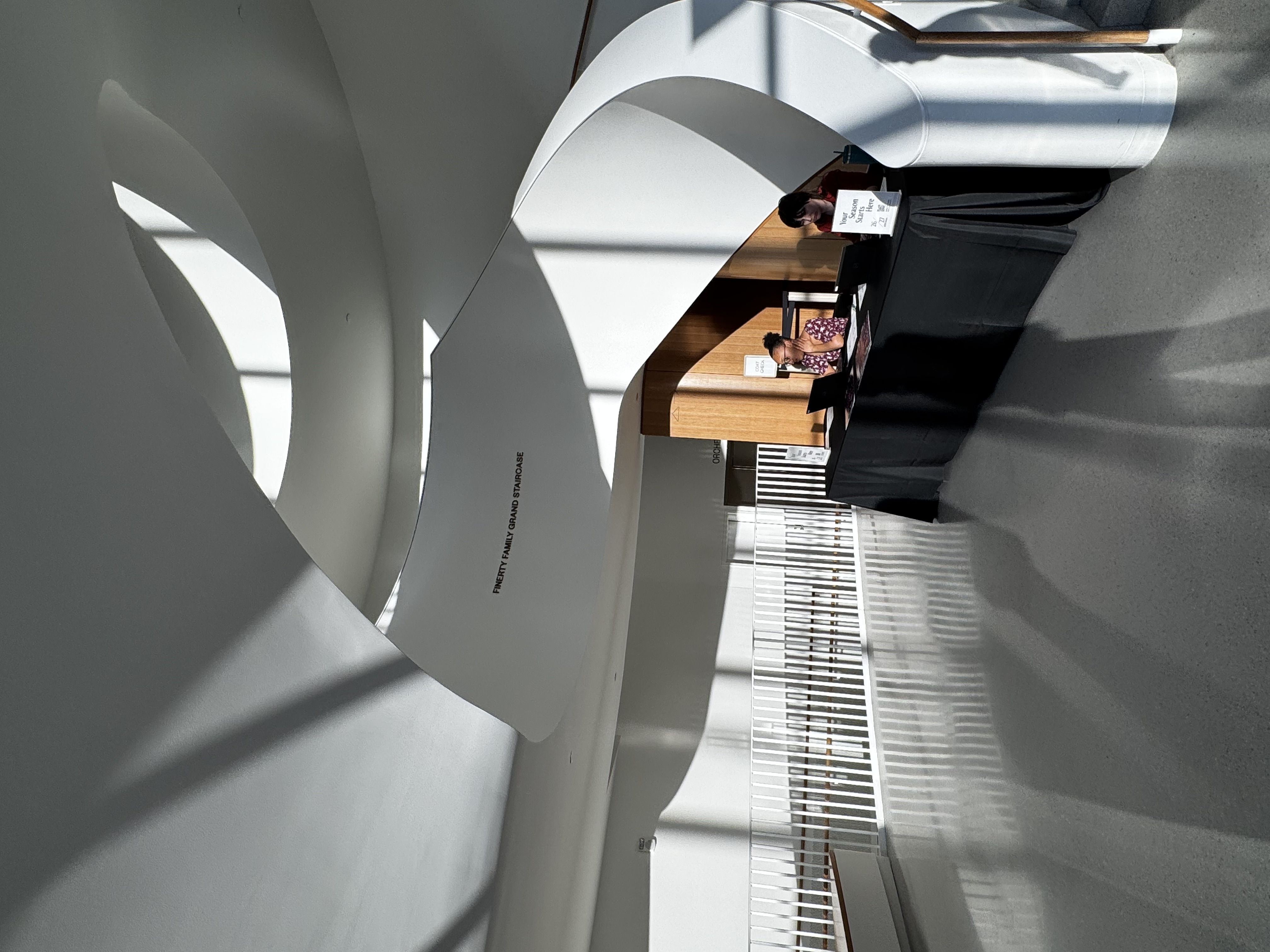
St Louis Symphony Orchestra’s March 14 concert:
Anna Sułkowska-Migoń, conductor
Leila Josefowicz, violin soloist
Grażyna Bacewicz (1909–69) | Overture
Alban Berg (1885–1935) | Violin Concerto
Nikolai Rimsky-Korsakov (1844–1908) | Scheherazade
The first half of the program leaned toward twentieth-century repertoire—classical bundling, in a sense, and a familiar programming strategy. From a purely practical perspective, orchestras could probably maximize revenue by programming Beethoven every night. Yet the willingness to rotate contemporary and lesser-known works into the repertoire reflects something more meaningful than an artistic director’s intellectual display. It signals a genuine commitment to exploration within the classical tradition. Programming like this keeps the repertoire alive and expanding; the music is treated not as a museum artifact but as a living practice. Art comes first, and the economics follow.
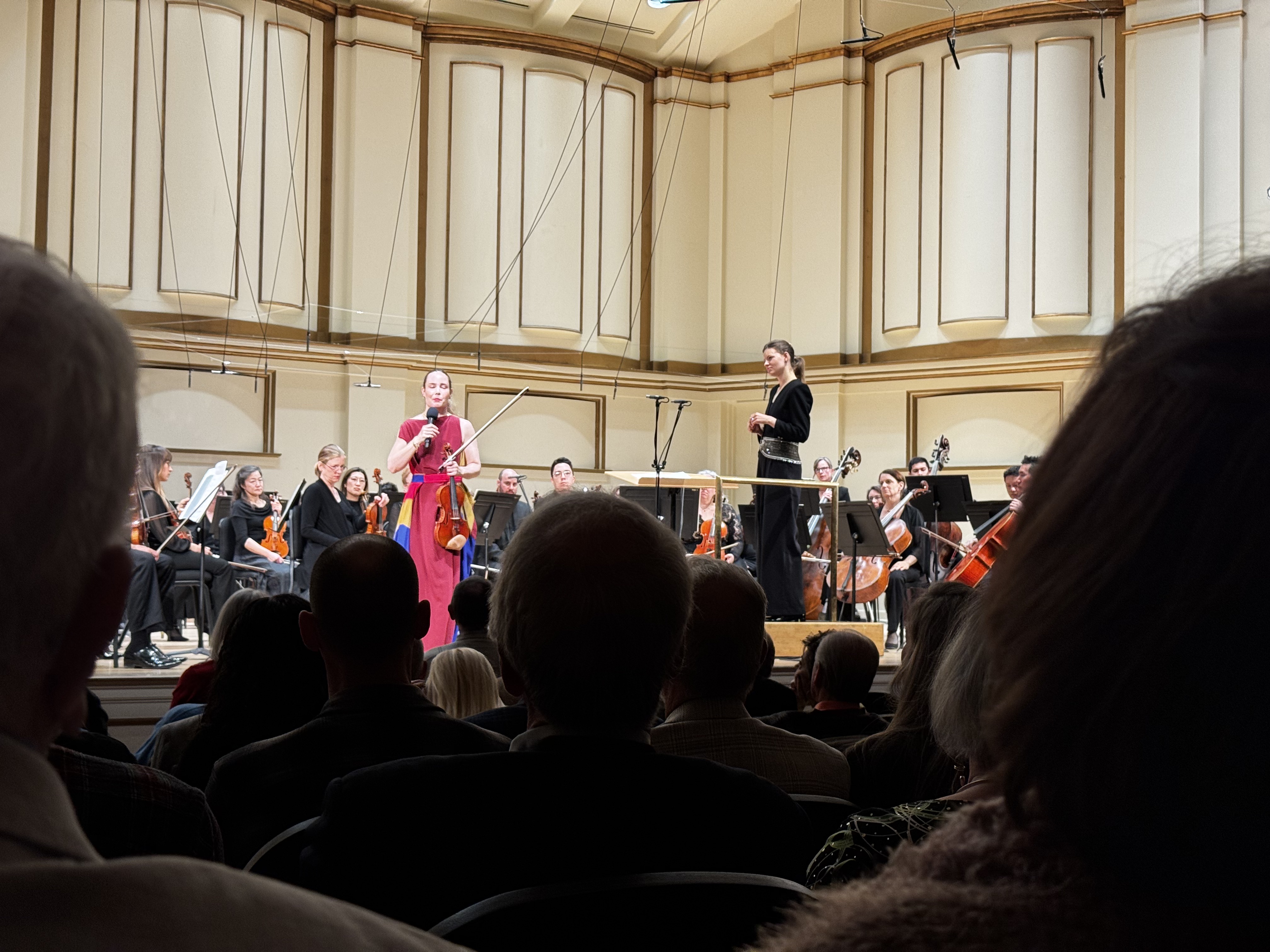
Some good 20 century music, where you really need a good violinist to execute it.
The hall proved especially well suited to Scheherazade, whose luxuriant orchestration benefits from both transparency and resonance. Rimsky-Korsakov’s colors emerged with remarkable vividness: the sinuous solo violin lines, the woodwinds’ ornamental arabesques, and the shimmering bed of strings all carried clearly through the texture without sacrificing warmth.
Every principal players was on fire that night, including the concertmaster — his intonation shaked in the first three movements of Scheherazade, though that read less as carelessness than as the byproduct of musical intensity—you get too nervous and overdo it. By the fourth movement, the violin solo was poised and luminous, beautiful.
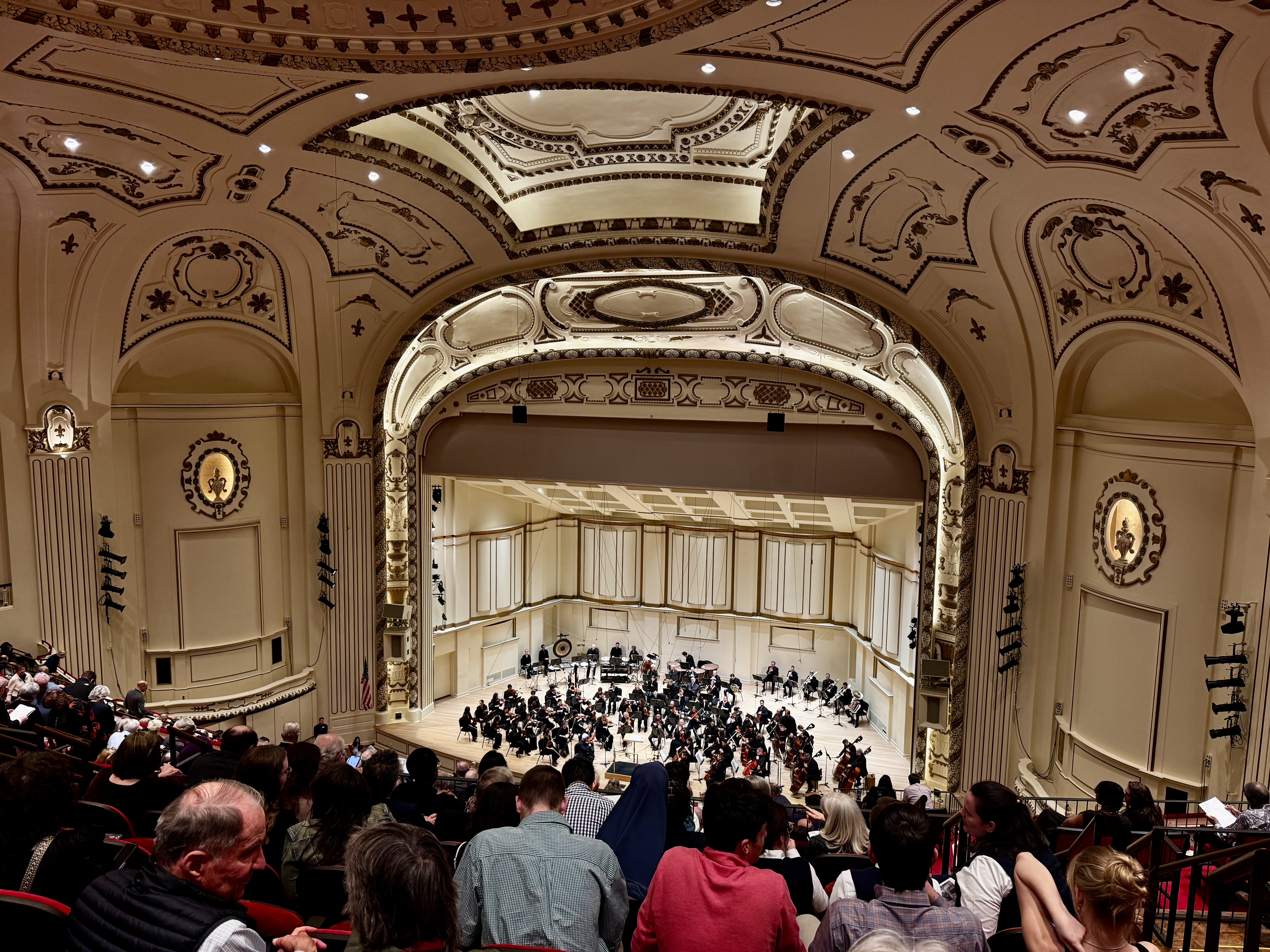
2nd floor view.
My friend and I initially sat on the front-right side of the orchestra level. The sightlines were excellent, but the acoustic is bad — the orchestral texture blended weirdly in chaos with no focus. During intermission, a kind usher offered us seats upstairs. At first we hesitated—the greater distance from the stage seemed like a compromise—but once the music resumed the improvement was immediately obvious. From the upper level, the hall revealed remarkable clarity: instrumental sections separated naturally, even down to the most delicate pizzicato in the strings, while the overall sound retained a warm and cohesive blend.
It may well be the finest concert hall I’ve experienced so far.
They had a grand ballroom
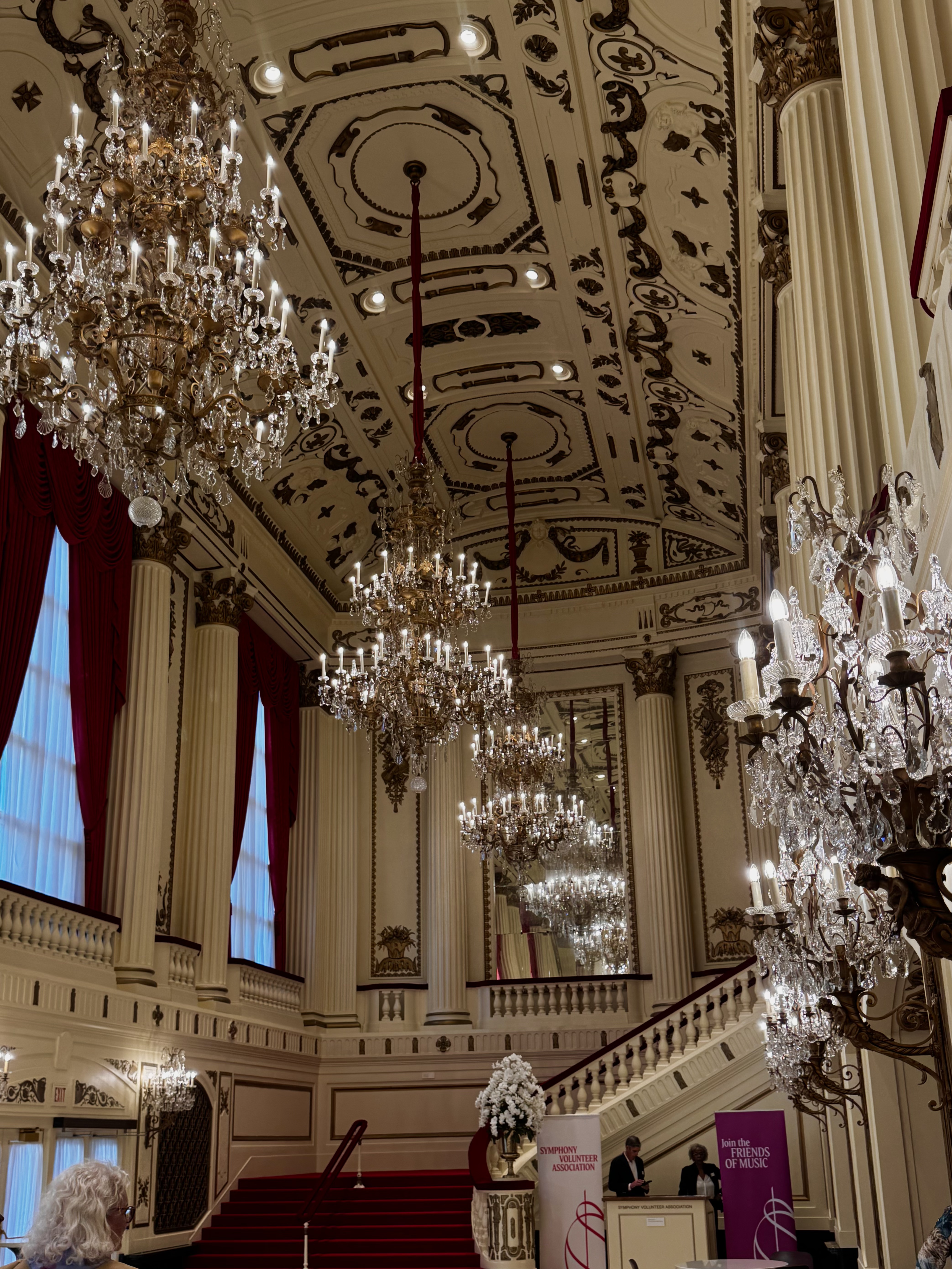
But ALSO a modern wing