The new ballet is emotionally direct, superbly choreographed, and beautifully staged. It’s a full reinvention — new score and all — yet the story and its spirit stay faithful to Pushkin.
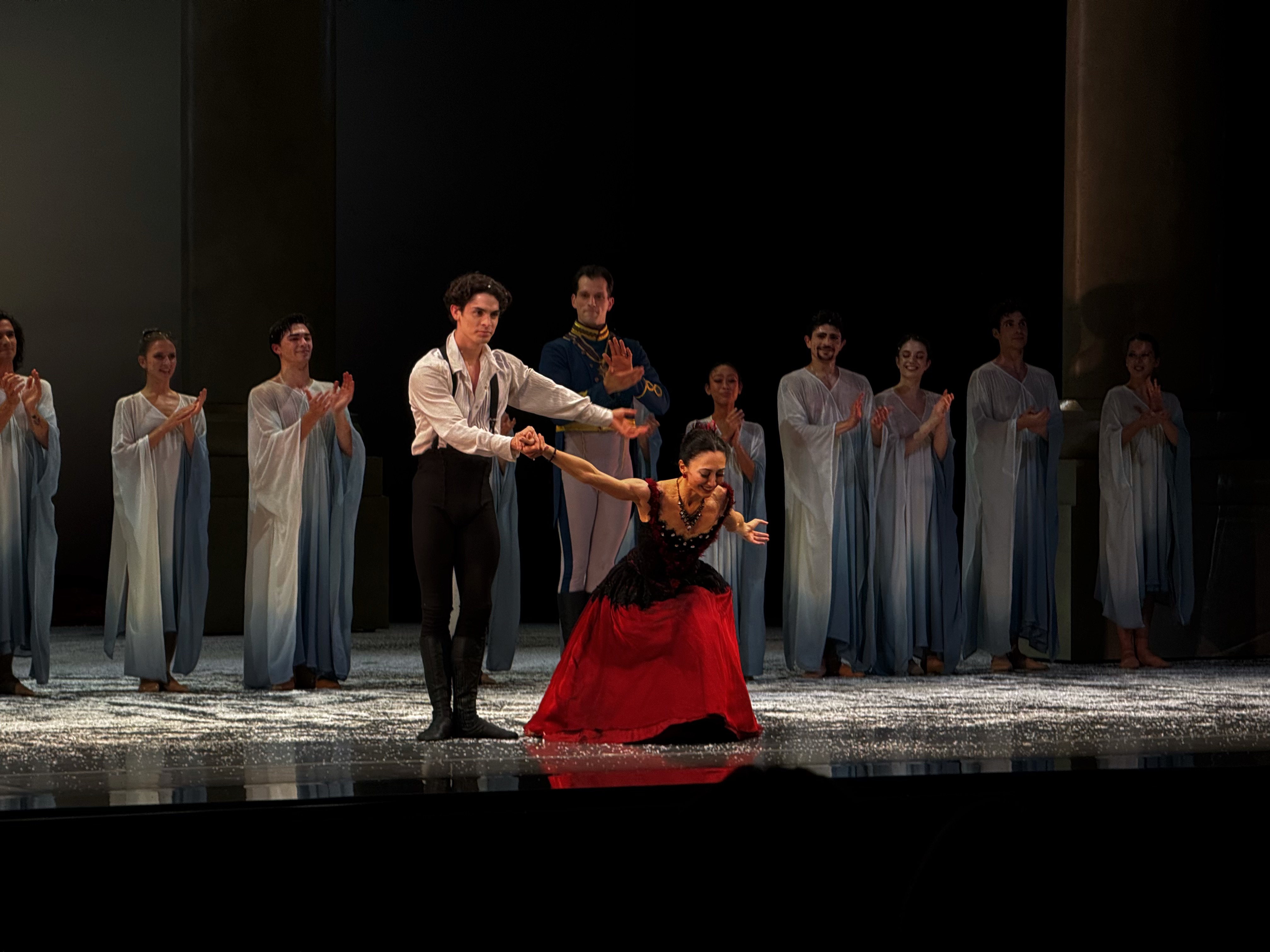
Rating: ⭐️⭐️⭐️⭐️⭐️⭐️ — the extra ⭐️ for a modern recreation of a classic that doesn’t fall apart just because the director wanted to flash some avant-garde nonsense.
So modern productions can be good and modern at the same time.
The core of the story is Onegin dismissing Tatiana’s love when it’s freely his, then craving it only once it’s beyond reach. And the real tragedy isn’t just that he failed to appreciate her — it’s that he can only desire what he can’t have.
The staging is more modern than I expected, with an almost stream-of-consciousness flow. Between the principals’ solos and pas de deux, the choreographer fills the stage with “season” dances — the corps, in saffron, dancing the spirit of each season: vibrant spring, feverish summer, tragic autumn, cold winter. It works like the landscape passages in classic novels. Exquisite 🤌🤌🤌
Joffrey’s dancers pair great technique with real dramatic artistry. On the night I went, Onegin was José Pablo Castro Cuevas and Tatiana was Victoria Jaiani. Cuevas was a pitch-perfect narcissistic, lost aristocrat. Jaiani’s young Tatiana was full of feeling but read as too knowing — she never quite caught the character’s wide-eyed naïveté. Her coming-of-age Tatiana, by contrast, was unapologetically charming.