The symphony hall smells expensive on Feb 14. As ushers barely got the time to nudge the couples chugging off champaigns and sit down, the valentines day night concert began with Joel Thomson’s To See the Sky.
The title of the work comes from my favorite line in Cécile McLorin Salvant’s “Thunderclouds,” my favorite song on her album Ghost Songs: “Sometimes you have to gaze into a well to see the sky.” That line gave me so much hope when I heard it. It’s an encouragement toward introspection—she’s saying, Just gaze inward. The well might be your community, the loved ones around you, or your own soul. But the line also acknowledges that there are moments when life gets so hard that you can’t even bother to look up. I’m so prone to melancholy, and I struggle with anxiety and depression. Sometimes I live in that place.
Much of my art has been documenting my internal and external reality as a Black man in our country … the movements outline a nonlinear journey toward healing….
Musically, this piece is an experiment. I don’t think I’ve written anything with orchestra before that relies on the rhythms of my youth. I’ve always been afraid to do so because then the question of genre arises. Dvořák could bring Bohemian tunes into his music, but then, if a Black person brings in African American music, does it become jazz? After [Terence Blanchard’s opera] Fire Shut Up in My Bones, I felt that maybe I had the room to do that. There are places in the work where I tried to access an ancestral plane.
The music is deep, modern, still structured. It’s a demanding, complicated piece that demands attention for the whole orchestra. I can hear Thomson’s creativity sparkles through the fancy, brilliantly composed brass and precussion lines through Zweden’s disciplined and energetic execution.
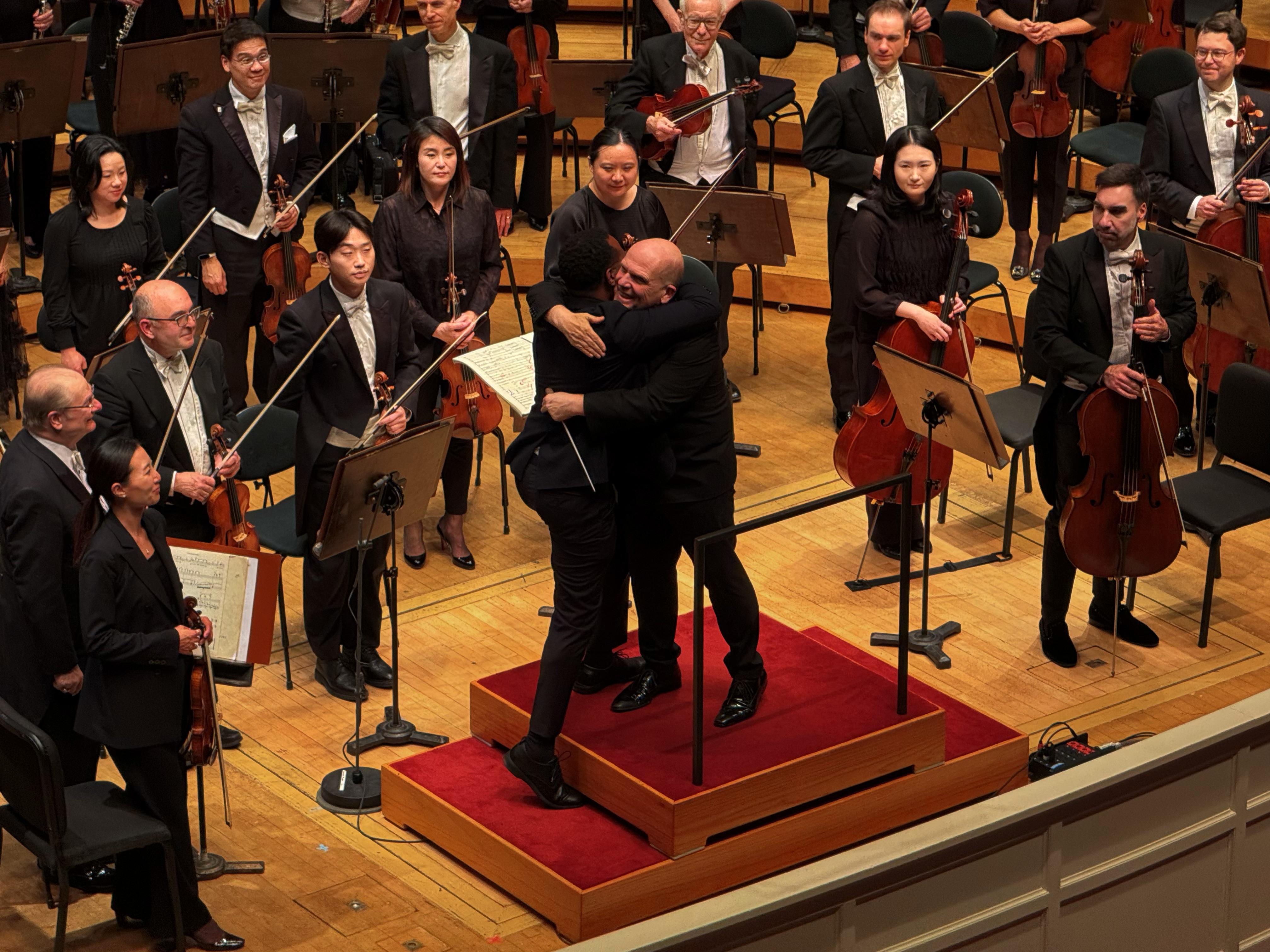
Notably, the piece’s premier was 2024 in NY, also with van Zweden conducting.
As the violins reshuffled for the soloist, I got some time to read about her. Her resume is really impressive:
Himari, born Japan 2011, began playing the violin at age 3 and performed with a professional orchestra by age 6. In 2025, at 13, she debuted with the Berlin Phil and signed exclusively with Decca. In 2026 she will be playing with the CSO, BSO and in Japan under the baton of Joe Hisaishi. She joins the CSO tonight to present Bruch’s Violin Concerto.
Her technique proved more than equal to the task—shed played through the concerto with ease, and encored Paganiniana, which is a fancy technical showcase that won over the heart of violinists in the audience and on stage. Her vibrato sound all the same, I don’t think I heart enough dynamic contrast and emotion. But there is time ahead for the interpretive layers to deepen and grow. Or as my friend coins it, “can’t wait to hear when she gets more (ex) boyfriends to layer up complexity…”
Not friendly.
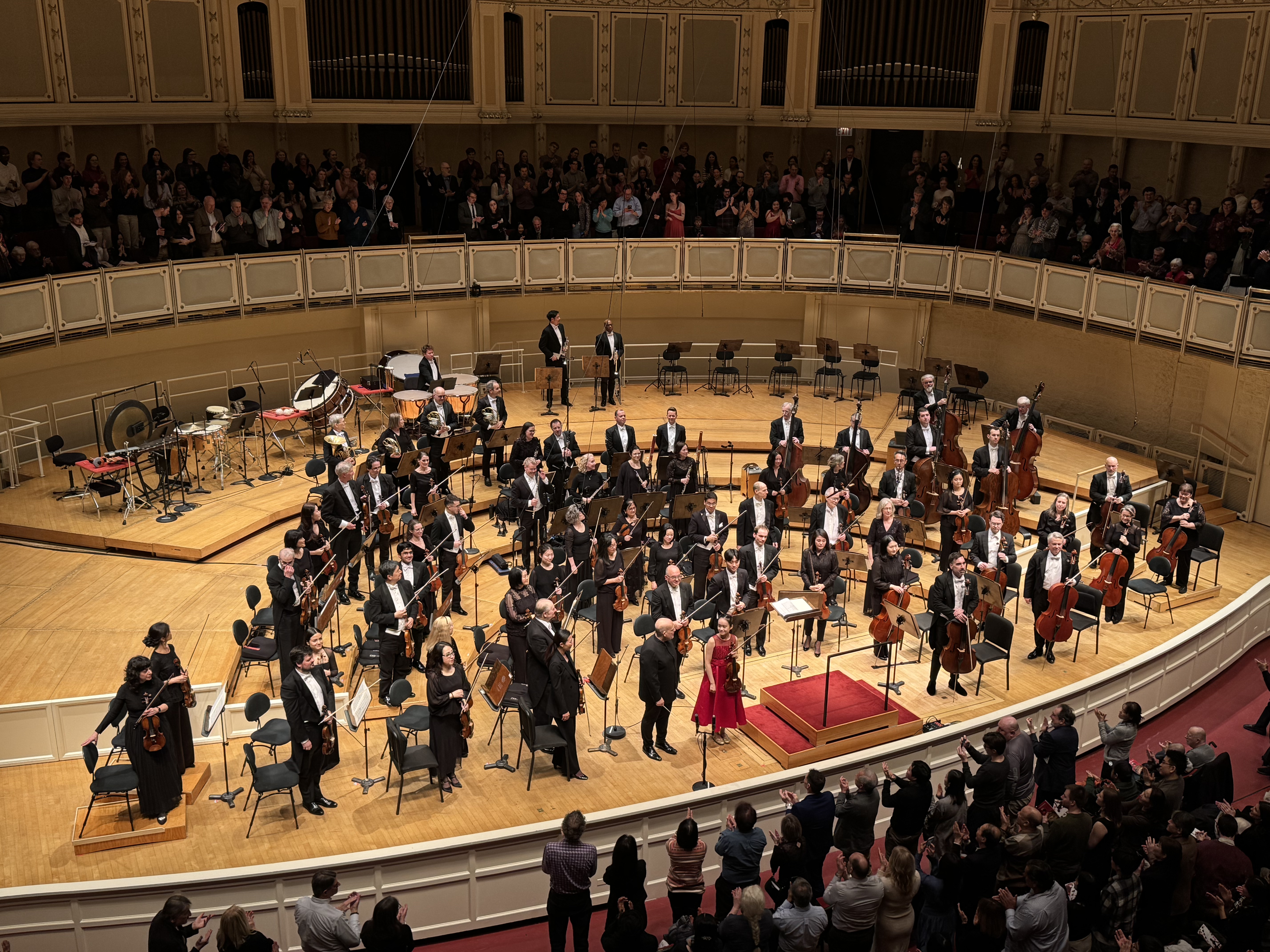
Remarkable talent.
The evening concluded with Mozart’s “Jupiter” Symphony. It was a poised and polished reading. Quite soothing that I almost fall asleep. The flutist, Jennifer Gunn, drew a notably warm, almost wooden timbre from the instrument that mimic the mozart-era sound.
The program brought together a future star and a monumental past, sustained by the world-class musicianship of Chicago’s musical community and an audience eager to celebrate. In the end, it felt both special and ordinary: another night in the hall, brightened by rose bubbled, and the shared understanding that everyone would return soon—perhaps next time a little more sober.