Contemporary program:
Joyce Light and Dark
Villa-Lobos Assobio a Jato (“Jet Whistle”) for flute and cello
Shaw Boris Kerner for cello + flower pots
Chen Yi Qi for flute, cello, percussion, piano
Dehnhard WAKE UP! for piccolo and alarm clock
Gosfield Daughters of the Industrial Revolution
Farrenc Piano Trio No. 4 in E Minor, Op. 45
What a program. When UChicago hands the reins to the artists themselves (according to Cynthia Yeh in the post-concert panel) — letting artists choose what they actually want to play — the results speak for themselves. No institutional hedging, no safe overtures. What we got instead was a concert of proper, fearless, genuinely good contemporary music. And the ensemble really CSO’s chamber music dream team:
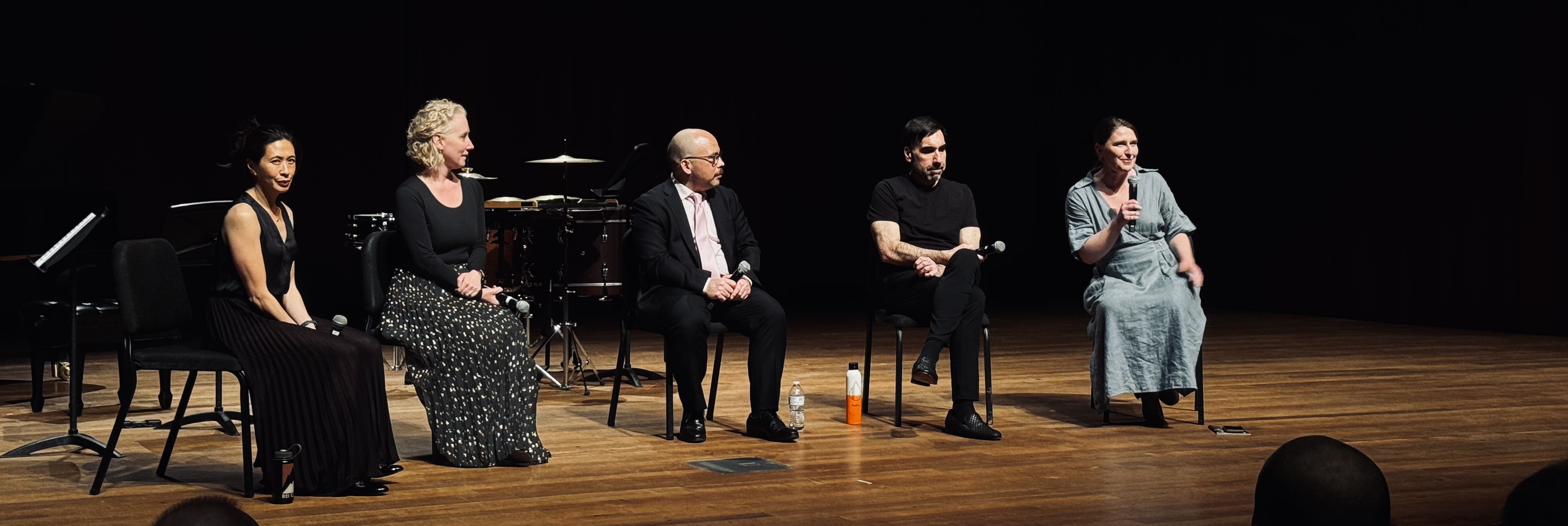
Cynthia Yeh (Percussion), Jennifer Gunn (Flute), Christopher Guzman (Piano), Kenneth Olsen (Cello), Professor Harper (Panel Moderator)
If a piece of contemporary music leaves you walking away with nothing — no image, no pulse, no residue of feeling — the fault likely lies with the composition. Good music, however adventurous, should be inviting. Yes, there are works that demand patience, repeated listening, asking you to meet them at an altitude you haven’t yet reached. That’s one thing. But too much of what passes for contemporary “art music” mistakes opacity for depth, confusing the audience not as a byproduct of complexity but as the point. Strip away the pretense and you’re left with something ornately hollow — sugarcoated emptiness dressed in the emperor’s new score.
This concert was the antidote. Every piece on the program proved that modern music can be playful, visceral, whimsical — and still move you to the bone. It doesn’t always have to be inscrutably avant-garde to be art. Sometimes the bravest thing a composer can do is simply be clear.
The Ghost of Bach lives in Flower Pots
The standout surprise was watching Cynthia Yeh conjure magic from a set of flowerpots — the humble, Home Depot variety. In Caroline Shaw’s Boris Kerner, the cello spun lines of unmistakably Bach-like grace while the flowerpots took off on dazzling runs — the kind of breathless, late-Romantic-meets-early-Modern virtuosity you’d expect from a concerto cadenza. Pressure on the garden pottery. Kenneth Olsen played the cello part with the reverence of someone performing the greatest music ever written — which is exactly how every piece should be treated. You don’t need a hundred-thousand-dollar marimba to sound transcendent. There was something almost Zen about it: the austerity of the instruments, the richness of the musical thought.
Bach ever suspect that someone, three centuries later, would compose something worthy of his idiom for flowerpots?
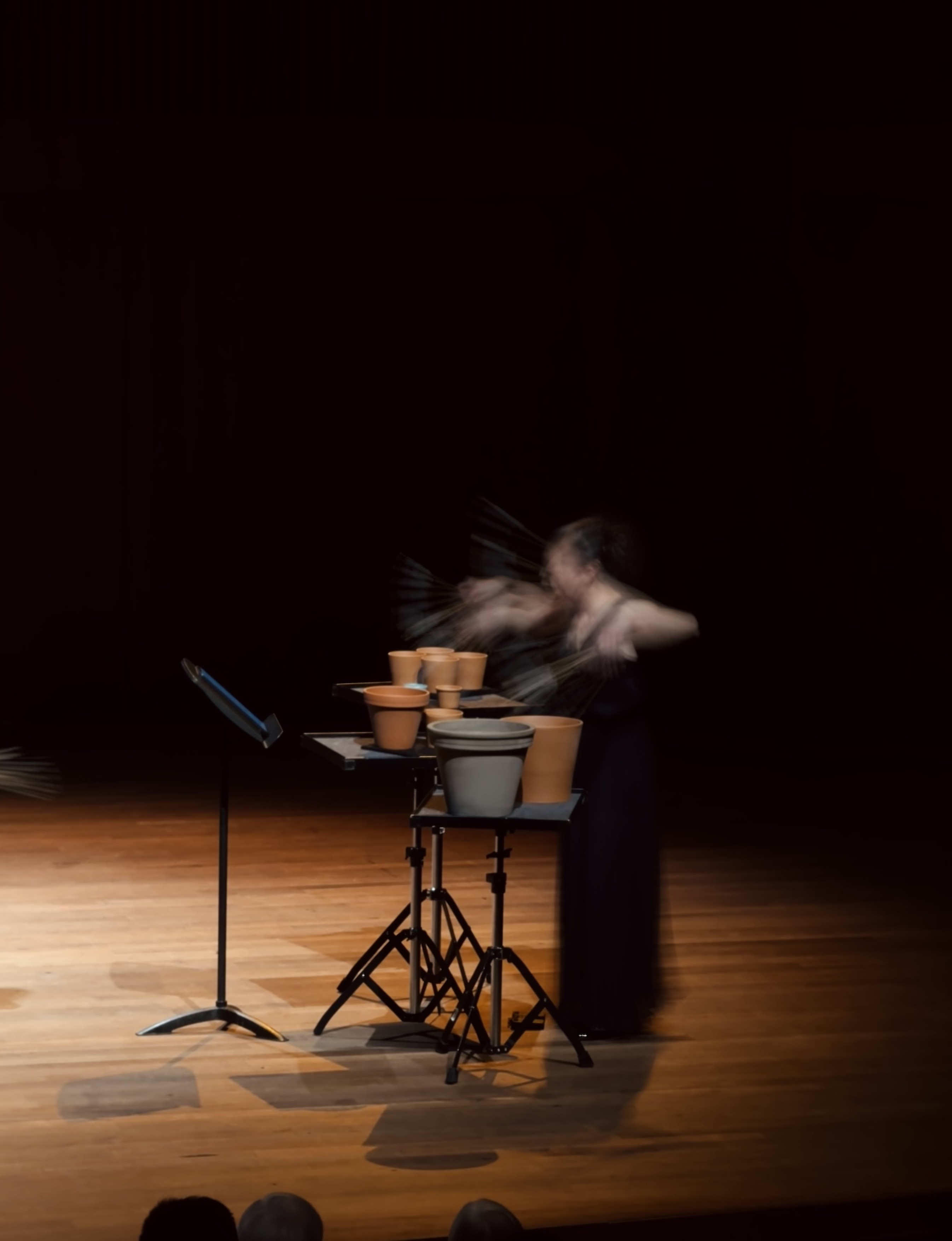
Cynthia Yeh with the (Home Depot) flowerpots
A Piccolo Losing Its Mind
Dehnhard’s WAKE UP! for piccolo and alarm clock was an utter delight — somewhat cutely absurdist. The alarm clock beeped like a deranged metronome, and against that relentless, mechanical pulse, Jennifer Gunn’s piccolo unravel in agitated, frantic, brilliant playing. It was comedy and virtuosity braided together.
Farrenc’s Trio — A Seating Quibble
The concert closed with Louise Farrenc’s elegant Piano Trio No. 4 in E Minor. The Scherzo (third movement) was particularly charming, full of wit and rhythmic spark. One small grievance, though: the flute sat center stage, angled toward stage left — a position that works beautifully for the violin, whose sound projects forward off the body of the instrument and toward the audience. The flute, however, when seated this way, much of Gunn’s playing disappeared into the wings, her runs surfacing only when the line climbed into the upper register. A subtle repositioning could have made a world of difference. The music was there; the balance was not.