The benefit of becoming a CSO donor:
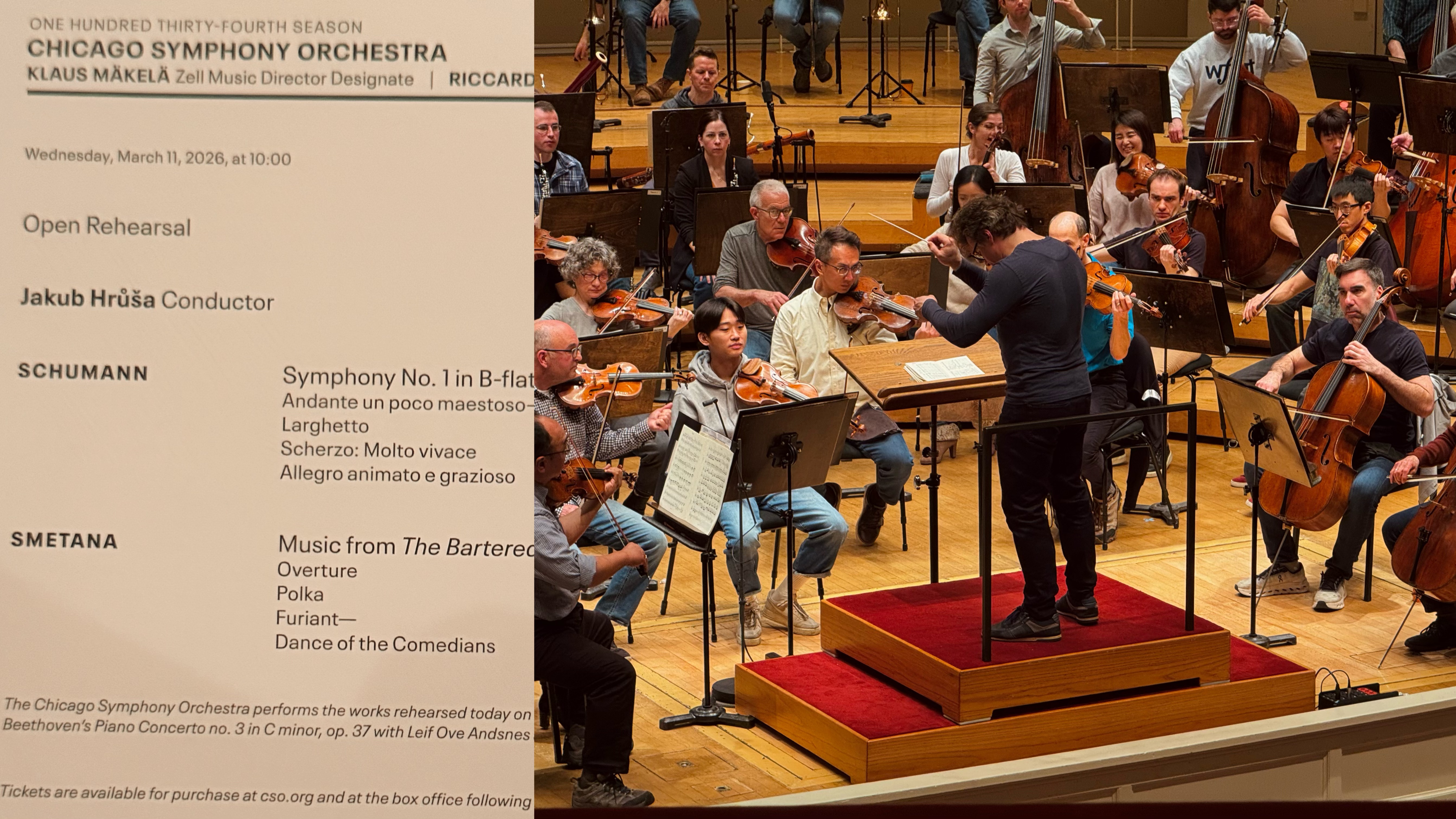
Bachtrak ranked CSO as the world busiest orchestra of 2025 — they presented the most concerts within a calendar year. The CSO has shows almost every week Thu-Sat. According to a college night interview, they rehearse every Wednesday and Thursday mornings before the first performance kick off Thursday night, weekly.
Being a professional orchestra musician is actually tough job. Winds who are counting bars are not necessarily 100% happy, I guarantee you. And when the first violin mess up during rehearsal, though not all conductors yell, but even hearing the Jakub Hrůša pointing out the mistake is quite stressful.
Jakub Hrůša: I don’t want to torture you, you need more time on this. these are high notes you need to be confident
Robert Chen: It’s very high note…
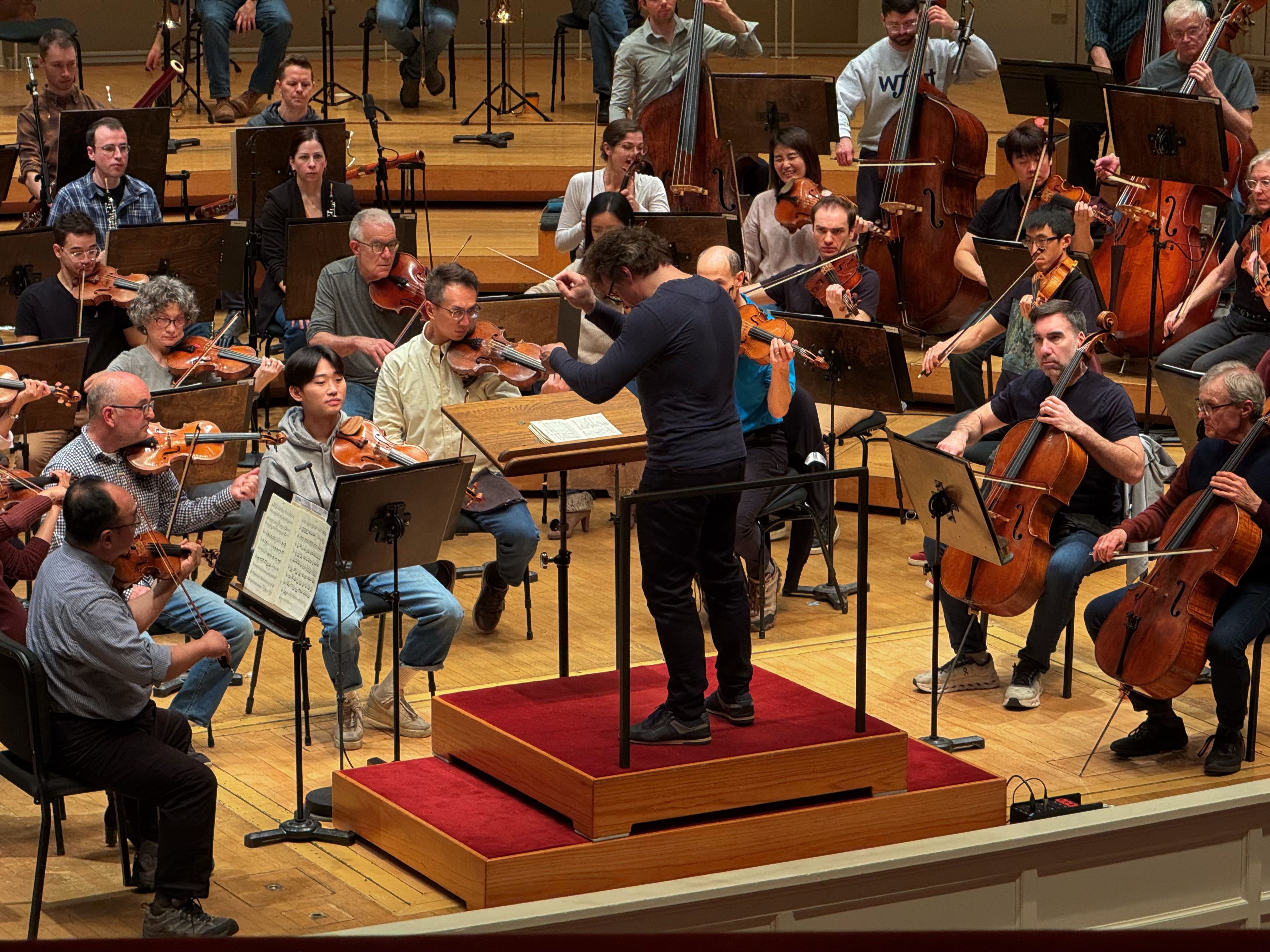
Orchestra rehearsal is stressful — see the glare of the 2nd violin?
Are orchestra musicians (un)happy?
Why They’re Not Smiling: Stress and Discontent in the Orchestra Workplace Seymour and Robert Levine, Harmony, April 1996 No.2
Orchestra musicians are observably (and sort of statistically verified <= Lehman, 1994) unhappy. We are stressed towards perfection, we have stage fright and anxiety attacks. But given the fact that chamber musicians who also experience performance anxiety are not as unhappy—the paper explains:
It is our thesis that this dissatisfaction is due to the levels of stress they experience and that much of that stress is due to their lack of control over their working environments.
…
Orchestras are fundamentally patriarchal. Underlying the behavior of conductors and musicians in the orchestra is the myth of the conductor as omniscient father (“maestro,” “maître”) and the musicians as children (“players”).
…[BUT] Musicians in a professional orchestra of any significance know quite a bit about music and about what they’re doing. So do many conductors, of course; but generally, individual conductors do not know more than the orchestra in front of them knows collectively.
…[BUT AGAIN] Someone has to run things, and that someone has to have the attention of the musicians. In order to prevent things from degenerating into chaos, musicians and conductors pretend that the conductor stands on the podium by divine right. Internalized behavioral norms and taboos protect that authority from any challenge.
The omniscience myth does “work” to some extent, as do most such myths, which accounts for their durability. Orchestras deliver musical services to their communities with a high degree of efficiency. Any competent professional orchestra can prepare and perform several new programs a week, a task impossible to most professional chamber ensembles. However, in adapting themselves to this myth [abyding the conductor], musicians pay a very high price in the form of chronic stress, job dissatisfaction, and infantilization.
…
During rehearsals or concerts, musicians experience a total lack of control over their environment. They do not control when the music starts, when the music ends, or how the music goes. They don’t even have the authority to leave the stage to attend to personal needs. They are, in essence, rats in a maze, at the whim of the god with the baton…
Extensive research has demonstrated that lack of control is a major cause of stress… Research has demonstrated a link between lack of control and the phenomenon of learned helplessness (Seligman, 1975)… Closely related to the development of learned helplessness is depression (Sapolsky, 1994).
It is unhappily very accurate.