Evgeny Kissin returned to Chicago Symphony Orchestra, this time with Andrey Boreyko, opened a short run of concerts built around a thoughtfully balanced program:
Rimsky-Korsakov: Russian Easter Overture, Op. 36
Mozart: Piano Concerto No. 12 in A Major, K. 414
Rimsky-Korsakov: Suite from The Tale of Tsar Saltan, Op. 57
Scriabin: Piano Concerto in F-sharp Minor, Op. 20
Rating: ⭐️⭐️⭐️⭐️⭐️. The program is repeated in Chicago the upcoming weekends then next week in Boston.
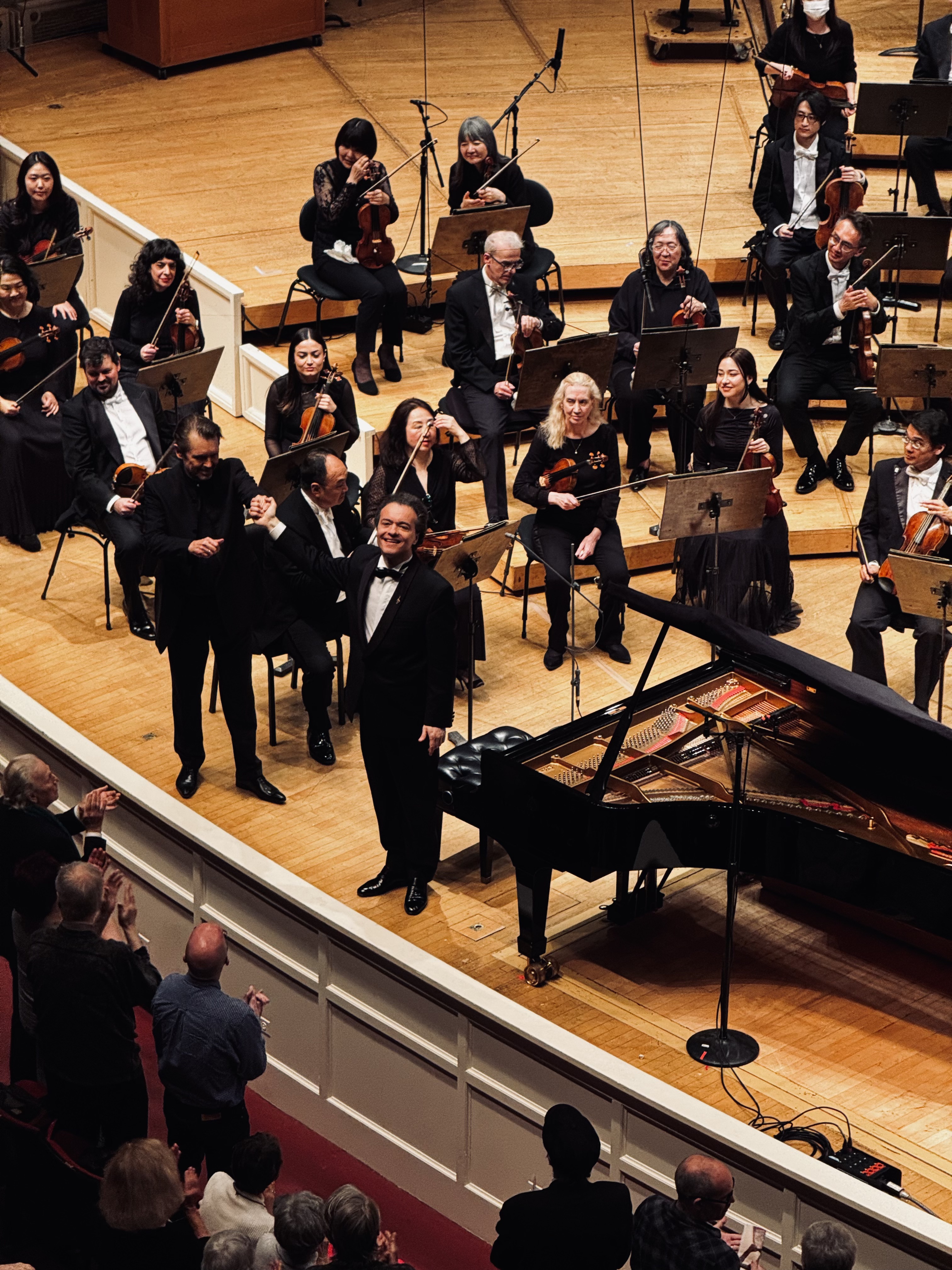
Kissin played Mozart K414 with breathtakingly excitement in elegance. The opening Allegro carried a faint trace of caution, as though he were testing the acoustic and the air of the hall and feeling his way into the space. Even in that slight reserve his articulation remained crystalline. And by the Andante he had fully arrived: the phrasing deepened, the tone softened into something inward and luminous, the music seemed to breathe with so much intimacy. The final Allegretto is buoyant, danced lightly—quick yet unhurried, delicate without fragility.
Boreyko’s conducting hand work is fluid and supple, shaping phrases in the air before they are heard, and making the orchestral textures feel almost tactile. Rimsky-Korsakov’s writing thrives under such attention. The Russian Easter Overture unfolded with a vivid sense of ritual and color, while the suite from The Tale of Tsar Saltan leaned into its storytelling instincts—exotic, bright, and imaginatively drawn. If Scheherazade is a grand tapestry, this suite feels more like a cabinet of miniatures: flashes of brilliance, quick turns of character, a certain delighted unpredictability.
The evening closed with Scriabin’s Piano Concerto. Here Kissin seemed entirely at ease, his technique both effortless and purposeful. The rapid passagework flowed with liquid clarity, and the melodic lines were given weight and direction. In this early Scriabin, I’d say you still hears the lingering perfume of late Romanticism—echoes beyond Sergei Rachmaninoff—yet also the first shadows of the composer’s later, more enigmatic language. Kissin captured that duality: warmth suffused with a hint of something unsettled, as if the music were already dreaming of its own future.
And guess who was able to met the artist:
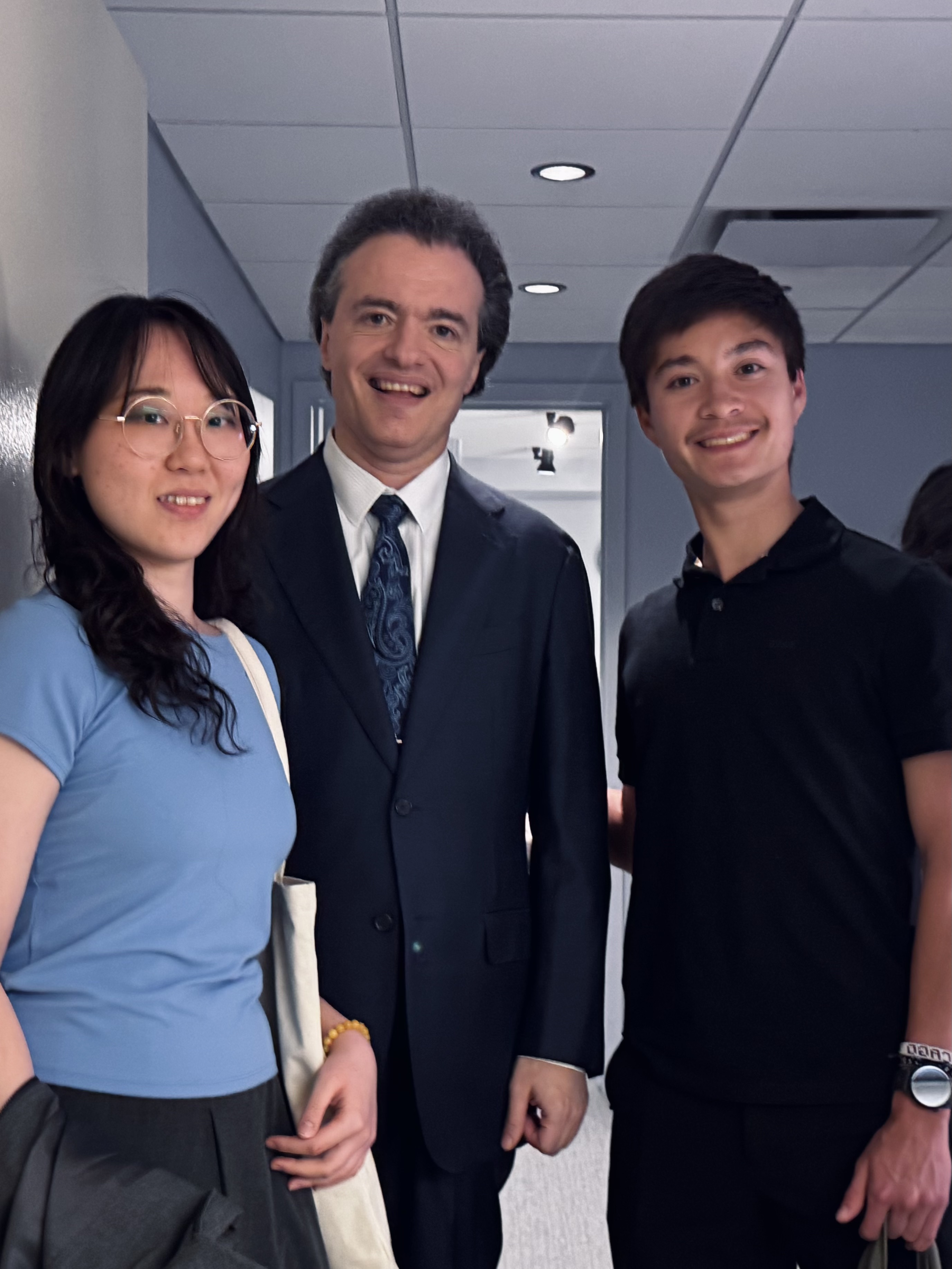
Backstage pass at the CSO — Guess who knows how to play the piano?