With my flute waiting to be repaired, I found myself exiled from orchestra rehearsal, so I figured I’d go hear Yo-Yo Ma with the Chicago Symphony Orchestra. It was a patron-only concert. I fought hard for the ticket and paid $180 for the cheapest seat in the house. By the end of the night, I rather wished I’d grabbed my Nuvo plastic flute and gone to rehearsal after all.
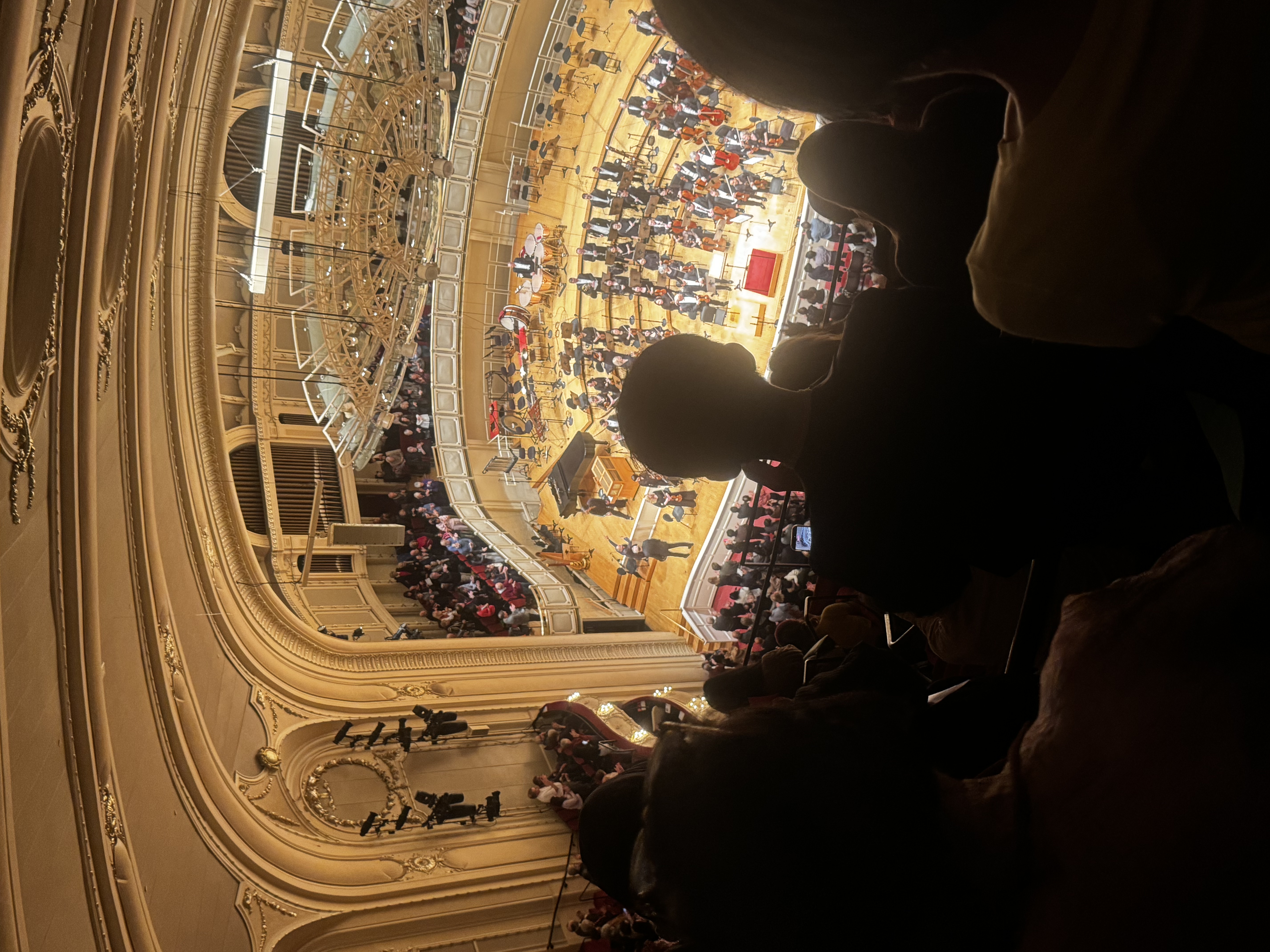
The $180 view, from literally above the stage. Yo-Yo Ma is down there somewhere. Rachmaninoff was not.
The evening opened with Ginastera’s Four Dances from Estancia. It was pleasant enough, though its 12 minutes never quite found their spark.
Then came Yo-Yo Ma in Shostakovich’s First Cello Concerto. His playing was layered, sensitive, thoughtful and deep, but the balance was a mess. I’ve never heard the flutes so loud. The winds and strings kept burying the cello, and the piece felt like it was coming apart. You don’t book Yo-Yo Ma so the audience can strain to hear him.
The second half brought Rachmaninoff’s Symphonic Dances, the part of the evening I’d been looking forward to most. The CSO played it immaculately, with every entrance clean and every climax on cue. But I struggled to find Rachmaninoff anywhere in it. This is his final completed work, written in exile and full of nostalgia, memory and reckoning, and the interpretation seemed content to leave all of that unexplored. The conductor rushed through it from start to finish, keeping time like a metronome. The rubato was so sparing it hardly registered, and the slow middle section of the first movement, the emotional heart of the piece, was hurried along with no room to breathe. What remained was bright, orderly and remarkably untroubled. I left more frustrated than I’ve been at a concert in years, wondering what this music could have been in other hands.
The conductor had one of the finest orchestras in the world at his disposal and drew out only a fraction of what it can do. The players kept everything polished, but polish was never the point of this piece.