My friend invited me to a Friday evening concert at the Logan Center for the Arts at the University of Chicago. The program, at least on paper, looked fashionable: contemporary works, a celebrated jazz pianist–composer, and the ever-adventurous Third Coast Percussion.
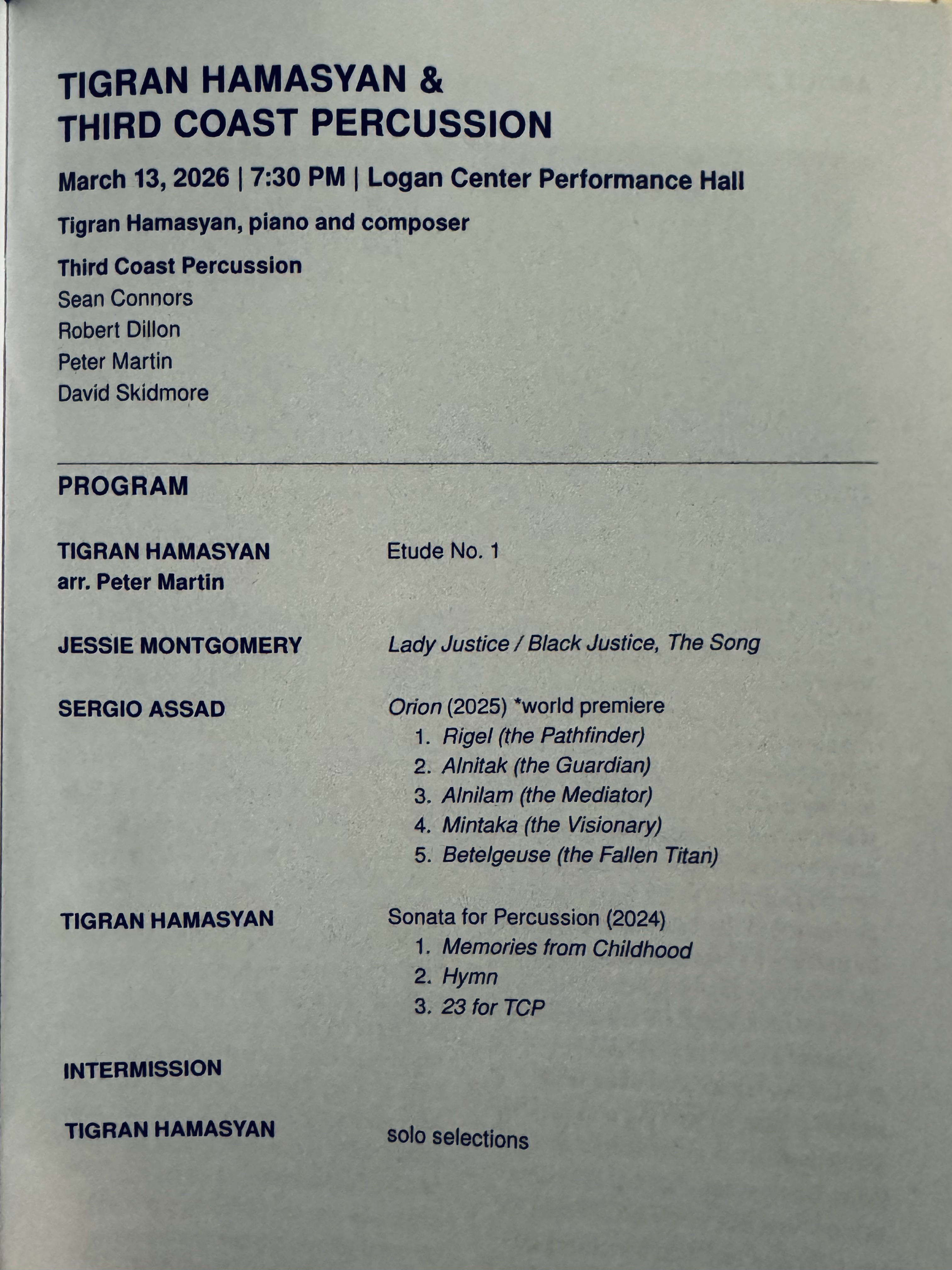
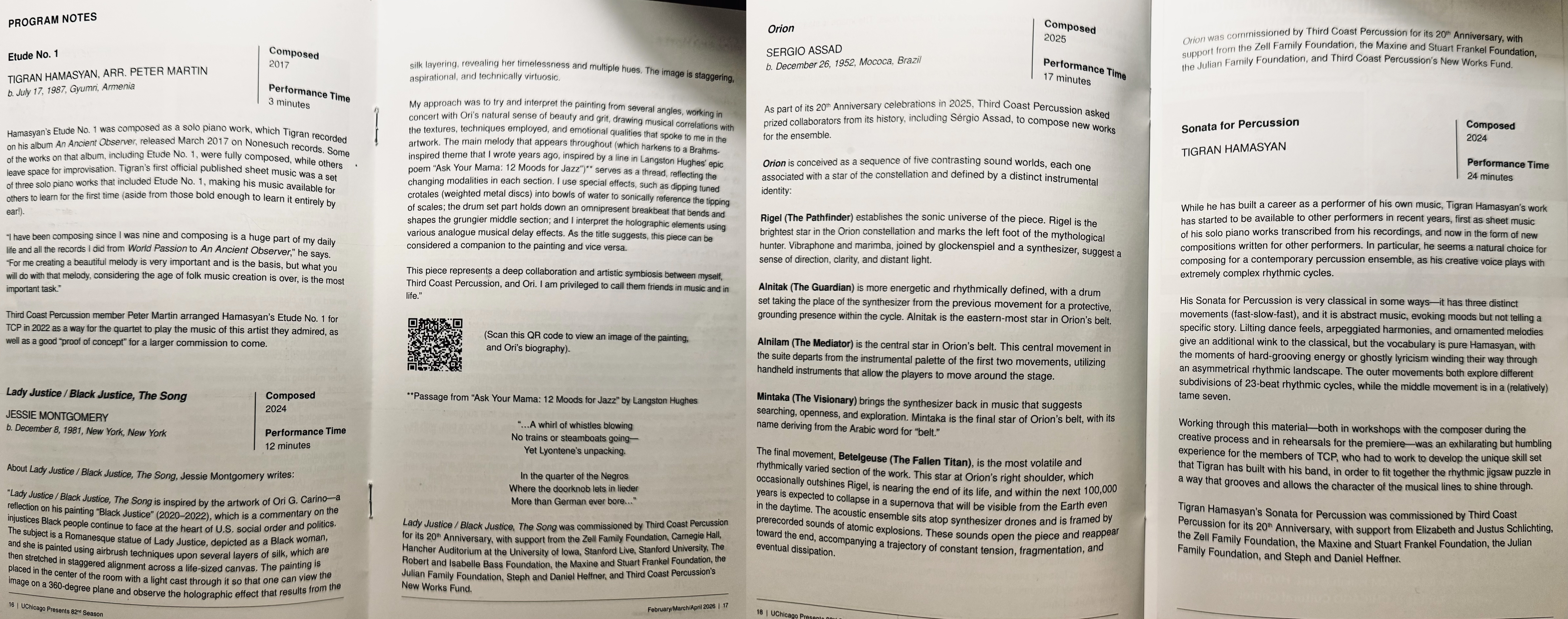
I read the program carefully—and still wasn’t quite sure what to expect…
The first half of the concert belonged entirely to the percussionists. Happy. Third Coast Percussion opened with an arrangement of Etude No. 1 by Tigran Hamasyan (the composer-pianist), followed by Jessie Montgomery’s Lady Justice / Black Justice, The Song, and the world premiere of Sérgio Assad’s Orion, a five-movement work inspired by the stars of the Orion constellation.
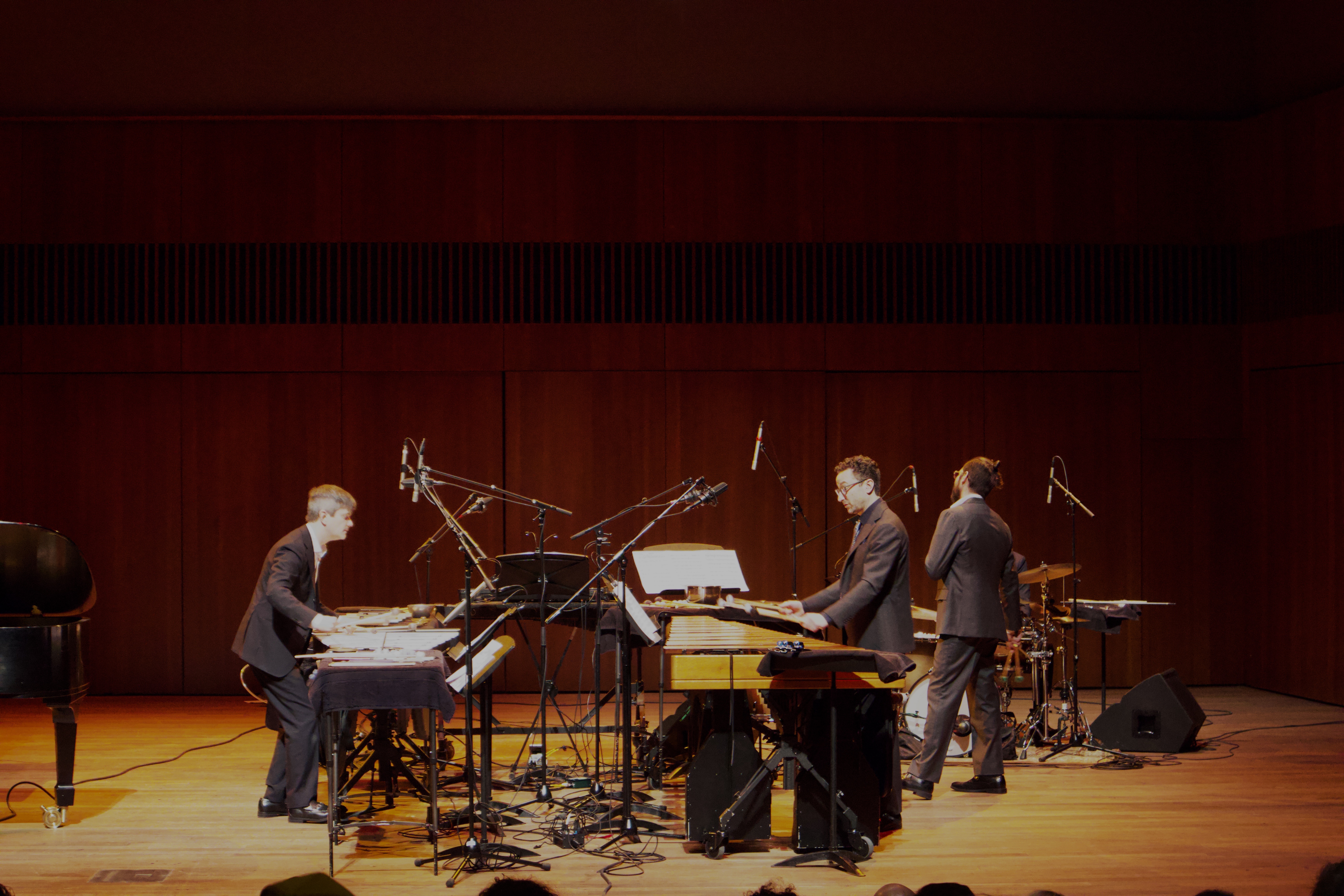
Percussion repertoire can easily become a display of gadgetry but the third coast precussion didn’t just stop there. The quartet played with formidable technique and, more importantly, with an impressive sense of ensemble. In Assad’s Orion, each movement corresponds to a star—Rigel, Alnitak, Alnilam, Mintaka, and Betelgeuse—and the performers moved fluidly among all the instruments to create sharply contrasted sound worlds. The textures were vivid, never cluttered; the rhythms super complicated yet perfectly coordinated. It felt carefully shaped and alive. The blend was remarkably clean. Nothing felt tentative or confused. Bravo.
Bravo.
Then the stage was cleared for Hamasyan himself at the piano.
Here my enthusiasm cooled somewhat.
There are, broadly speaking, two reliable ways to make a steinway concert grand sound like the upright practice piano in a conservatory basement. The first is to have me play it. The second is to put a microphone on it and run the signal through a stereo system.
Hamasyan chose the latter. He played fragments of melody, showcased some sudden rhythmic turns, sang and mumbled beatbox, and delivered some moments of theatrical audience participation — at one point he had the audience singing along, which the crowd embraced with enthusiasm. It may well have been the evening’s most visibly joyful moment.
Yet the musical substance felt thin. Amplification flattened the piano, and the gestures of audience-sing feels designed more to create atmosphere than to develop musical ideas. It produced excitement, certainly—but hype alone is not quite the same thing as meaning.
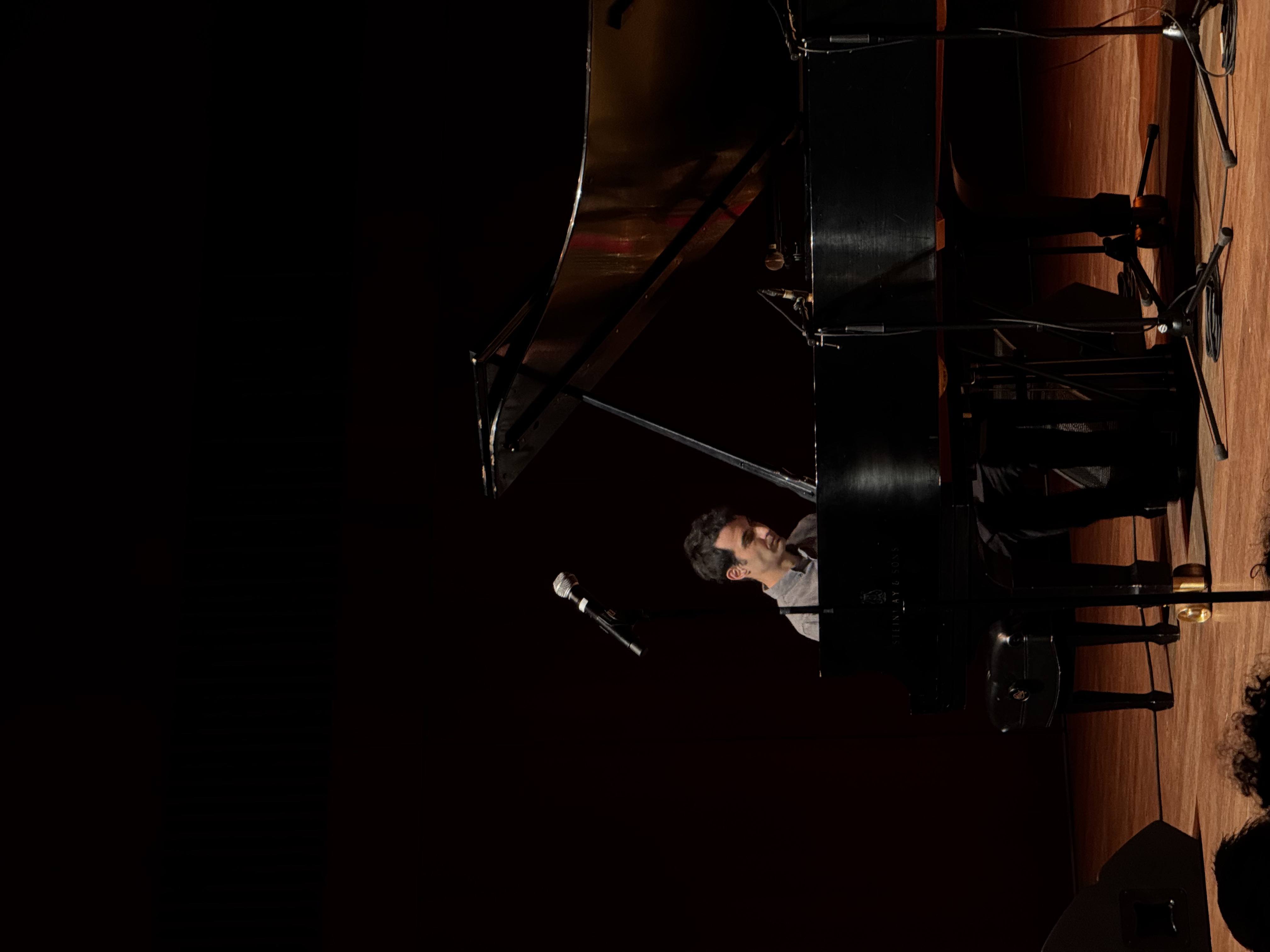
Don’t wire the piano to a microphone. It’s sacrilegious.
Paul Graham once wrote something perceptive about artistic craft:
For one thing, artists, unlike apple trees, often deliberately try to trick us. Some tricks are quite subtle. For example, any work of art sets expectations by its level of finish. You don’t expect photographic accuracy in something that looks like a quick sketch. So one widely used trick, especially among illustrators, is to intentionally make a painting or drawing look like it was done faster than it was. The average person looks at it and thinks: how amazingly skillful. It’s like saying something clever in a conversation as if you’d thought of it on the spur of the moment, when in fact you’d worked it out the day before.
How Art Can Be Good | Paul Graham | December 2006 | https://paulgraham.com/goodart.html
Sometimes music does something similar. It gestures toward spontaneity, toward depth, toward revelation—without actually delivering it. The percussionists, on the other hand, simply played. And that, in the end, was the most convincing part of the evening.