Sleepingbot
open full page →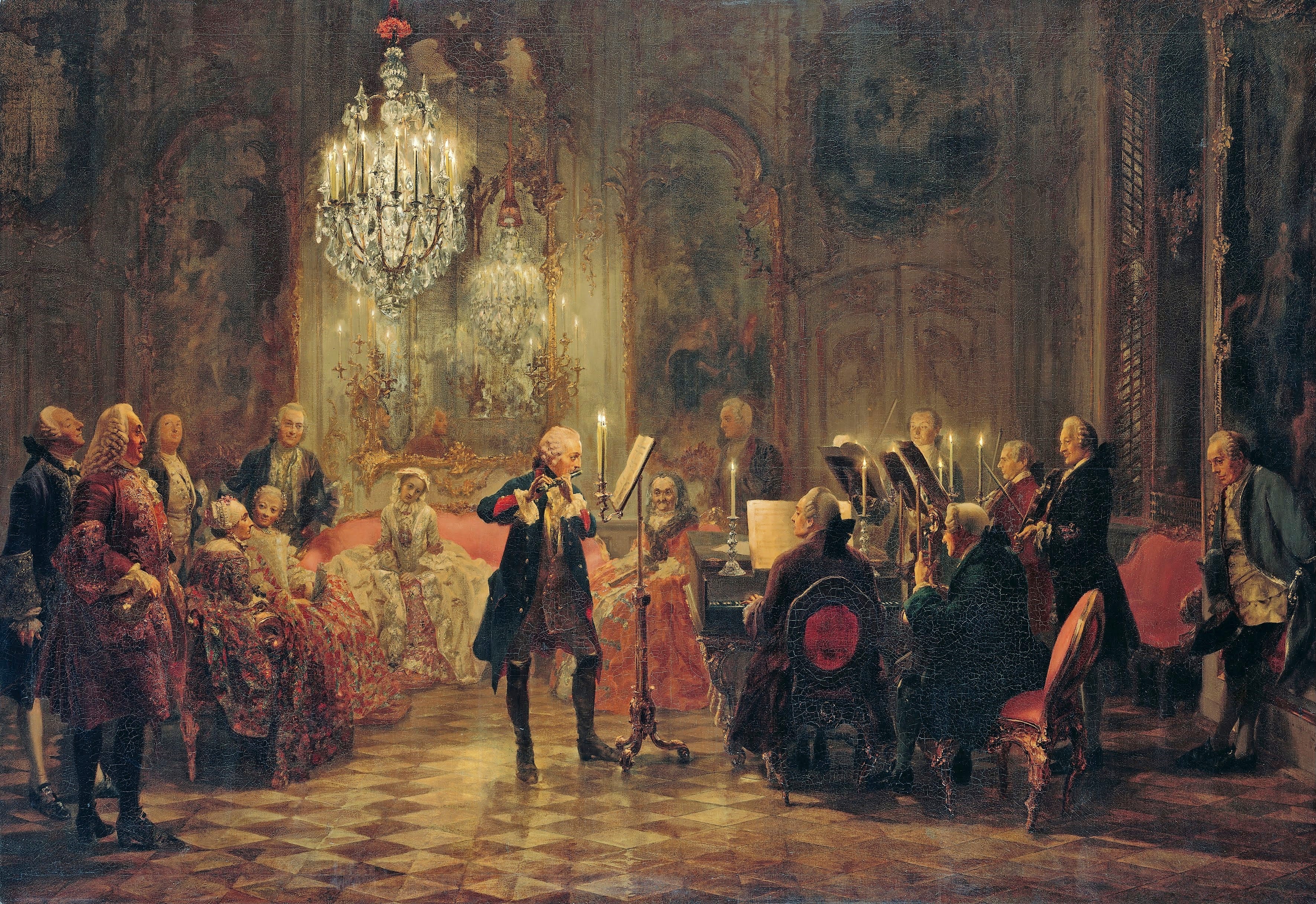
Blog Posts About Classical Music
A loosely sorted and lightly annotated catalogue of through the music posts on this blog.
frequent lender program
Disclaimer: This post summarizes and comments on a publicly available opinion essay and its reader comments. Facts and figures about specific companies are as reported in that essay and have not been independently verified. Everything else is my own opinion and interpretation. I have no affiliation with any airline or bank mentioned, and nothing here is financial or legal advice. In a New York Times guest essay, Mark Kahan, a former Spirit executive, argues that Spirit Airlines died partly because it couldn’t borrow the way its big rivals can. Big airlines sell miles to the banks behind their branded credit cards. Those card deals are so profitable for the banks that, by Kahan’s account, the banks lend to their airlines on easy terms and help keep them afloat in bad times. Spirit’s card was too small to earn that treatment, and in his telling its banks held money back instead. ...
allume | flute and harp
The title track of Allume is by the harpist herself. Carrol McLaughlin (1952–2018) grew up in Alberta and was playing professionally as a teenager. She ran the harp department at the University of Arizona for over thirty years and founded HarpFusion, a touring harp ensemble. Allume is French for “lit,” as in a candle. One review says the piece was inspired by monastic illuminations. You can hear it: the harp is gold leaf, the flute the lettering. Neither is flashy, and both are lovely. ...
Piazzolla Café 1930 | flute and harp
Histoire du Tango is one of Piazzolla’s most popular chamber works: a history of the tango in four scenes, written for flute and guitar and frequently stolen by cellists. Café 1930 is the decade when people stopped dancing to tango and started listening to it. It’s slow, melancholy, and more about sitting than moving. Swapping guitar for harp is an easy trade, since both are plucked. The harp has more resonance, though, so the café sounds a little more expensive. Luce keeps the flute dark and low, and the piece stays sad. ...
Durand Christus Factus | flute and harp
Auguste Durand was an organist who became a publisher. His firm, Durand & Cie, went on to publish Debussy and Ravel. Long before that, he wrote a salon piece for piano, the Première Valse, Op. 83, which sold enormously and was played in every parlor with a piano. This track turns the waltz into Christus factus est, the gradual for Holy Thursday (“Christ became obedient unto death”). It’s an odd marriage, but it works. The tune turns out to be hymn-like once you slow it down. Without the waltz rhythm, it’s a lovely, earnest melody, and on flute and harp it sounds a bit like a church on a weekday afternoon. ...
Blavet L'Henriette | flute and harp
Michel Blavet was the best French flutist of the 1730s. Quantz admired him, and Frederick the Great tried and failed to hire him. He was largely self-taught and held the flute to the left. L’Henriette is the first of his Op. 2 sonatas (Apple labels it No. 2). The heart of it is the third movement, an aria named after the sonata: a simple rondeau tune that keeps coming back, each time a little more ornamented. ...
a hub is a shortcut and a chokepoint
Disclaimer: This post summarizes and comments on a publicly available research paper. All interpretations are solely my own. Brent Neiman gave a talk on his paper with Gregor Matvos, Financial Sanctions and the Global Payments Network. The data come from LexisNexis Risk Solutions: standard settlement instructions (SSIs), which record, for each currency a bank can receive, the correspondent(s) it receives through. Stacked together, they give a map of the correspondent network by currency: 17,403 EMDE financial institutions, six snapshots from September 2021 to August 2026, merged with an OFAC/EU/HMT sanctions indicator. ...
stravinsky and the winds
Stravinsky preferred winds to strings, and said so. In a 1924 note on his Octet, he wrote that winds better rendered “a certain rigidity of the form,” while strings were “less cold and more vague.” Coming from him, cold was a compliment. Hence the Symphonies of Wind Instruments, the Octet, a piano concerto accompanied only by winds, and the Symphony of Psalms, which has no violins or violas at all. ...
Everyone says I love you (1996) is like Mozart
Woody Allen’s 1996 musical, with Julia Roberts, Natalie Portman, Tim Roth and Drew Barrymore. The cast sings old standards in their own voices, and everyone sings awfully. Barrymore was the exception: she got dubbed. The awfulness adds to the fun. If I wanted someone who can sing, I’d watch an opera. The movie is really pretty, though. New York in the fall, Venice, Paris at Christmas, Goldie Hawn floating along the Seine. It even features Perlman. Everything about it is luxurious. ...
Poulenc, Brahms, Loeffler | Loeffler Octet at Logan
Tonight at the Logan Center: the Loeffler Octet, built around Charles Martin Loeffler’s 1897 octet, which clarinetist Graeme Steele Johnson found in the Library of Congress in 2020. That was the headline. The highlight came first. Poulenc wrote his Sonata for Two Clarinets at nineteen, in the army, and it’s over in about seven minutes. It’s weird, quirky, and cute: two clarinets winding around each other like snakes poking their heads out of a charmer’s basket, swaying, shaking, ducking back in. Johnson and Zachary Good played it. ...